Q&A with Ellie Walker
Intro
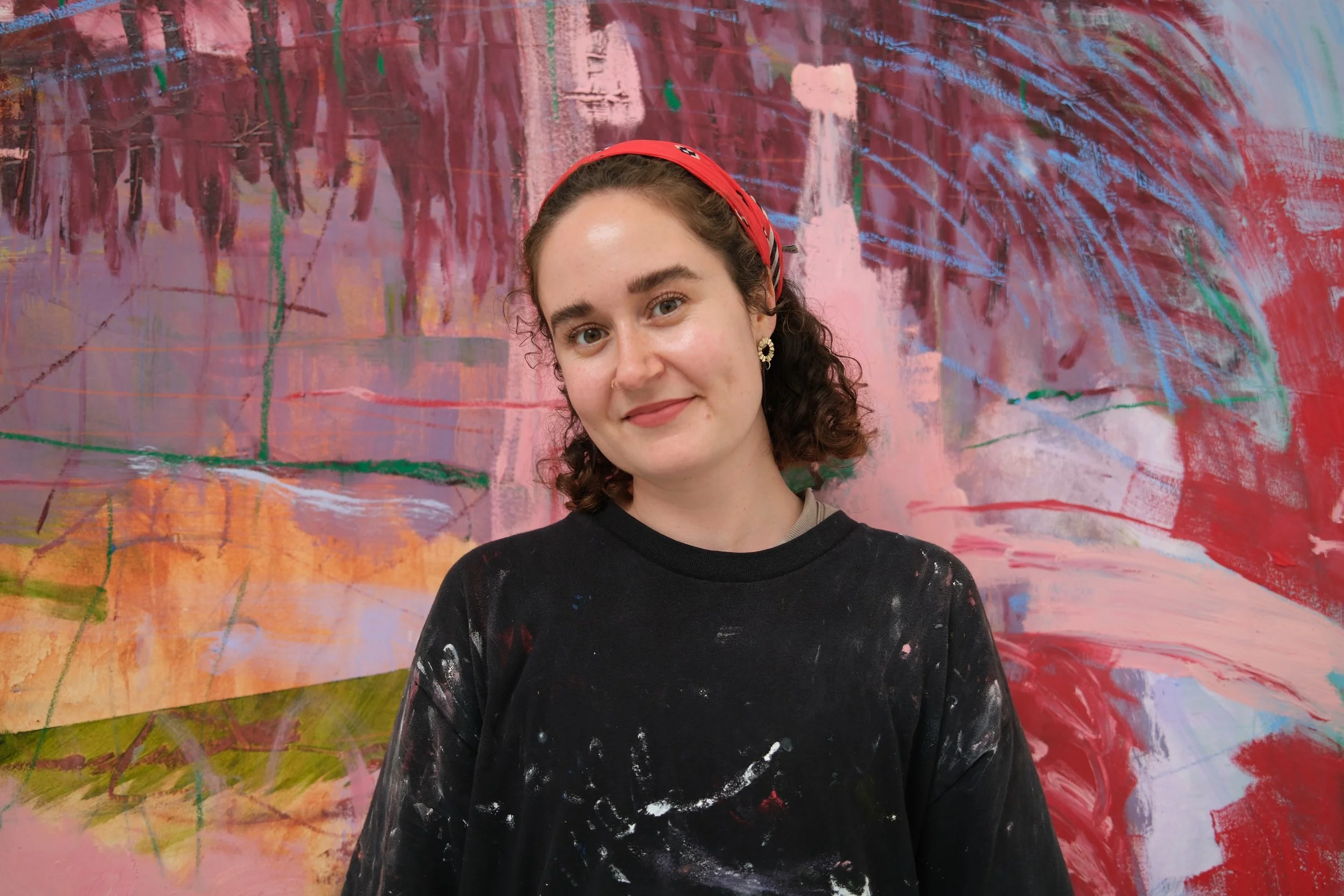
In conversation with Artroom Curated founder Vanita Barany, painter Ellie Walker reflects on process, intuition, and the physical dialogue she builds with her paintings. Her practice is rooted in responsiveness to colour, material, and the moment, where control is often relinquished in favour of discovery. From working directly on the floor to cutting, stitching, and re-figuring past works, Walker’s paintings emerge through cycles of resistance, destruction, and renewal.
Tell me, in your own words, how you approach a blank canvas in your studio. Do you make sketches first?
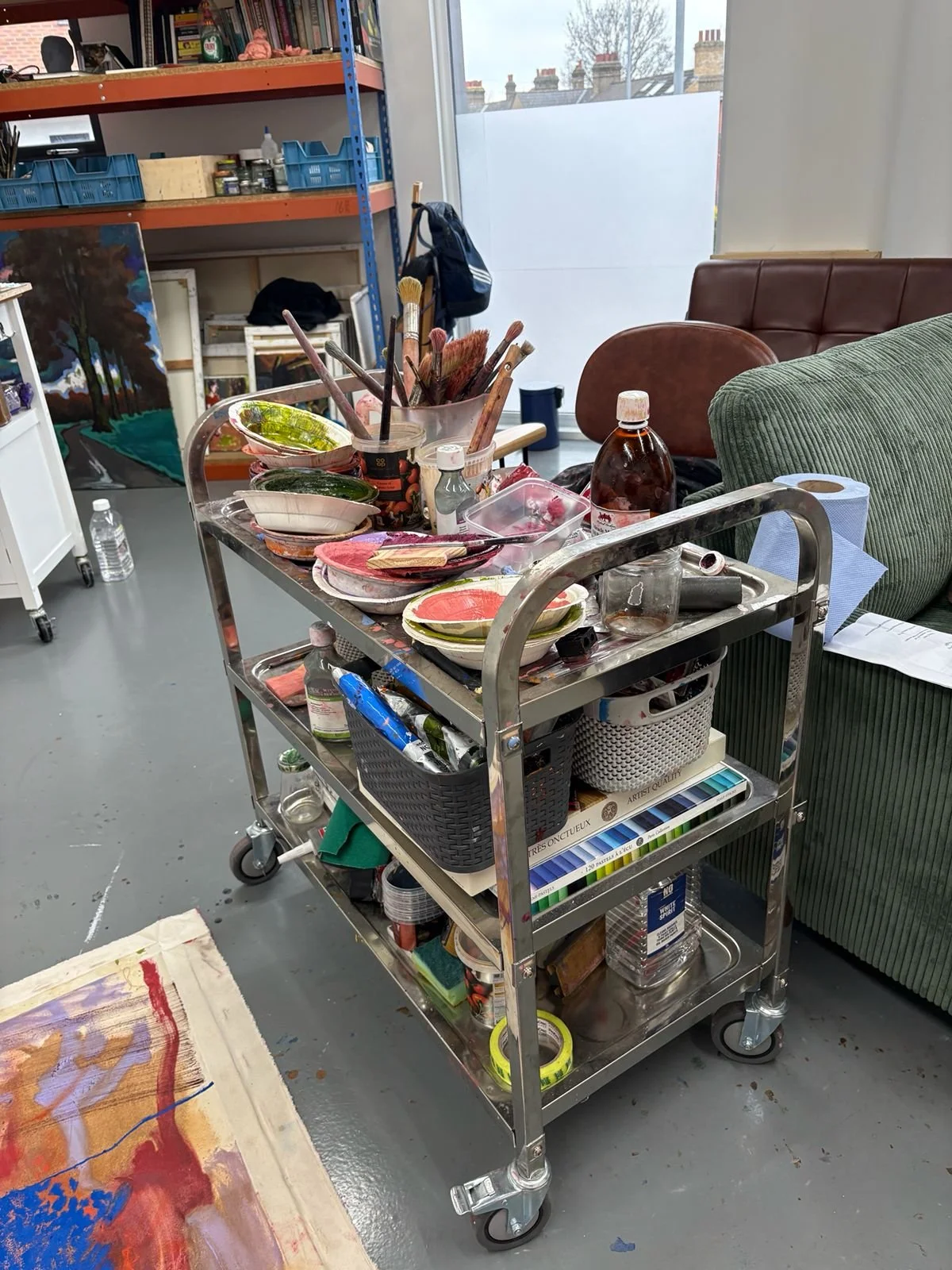
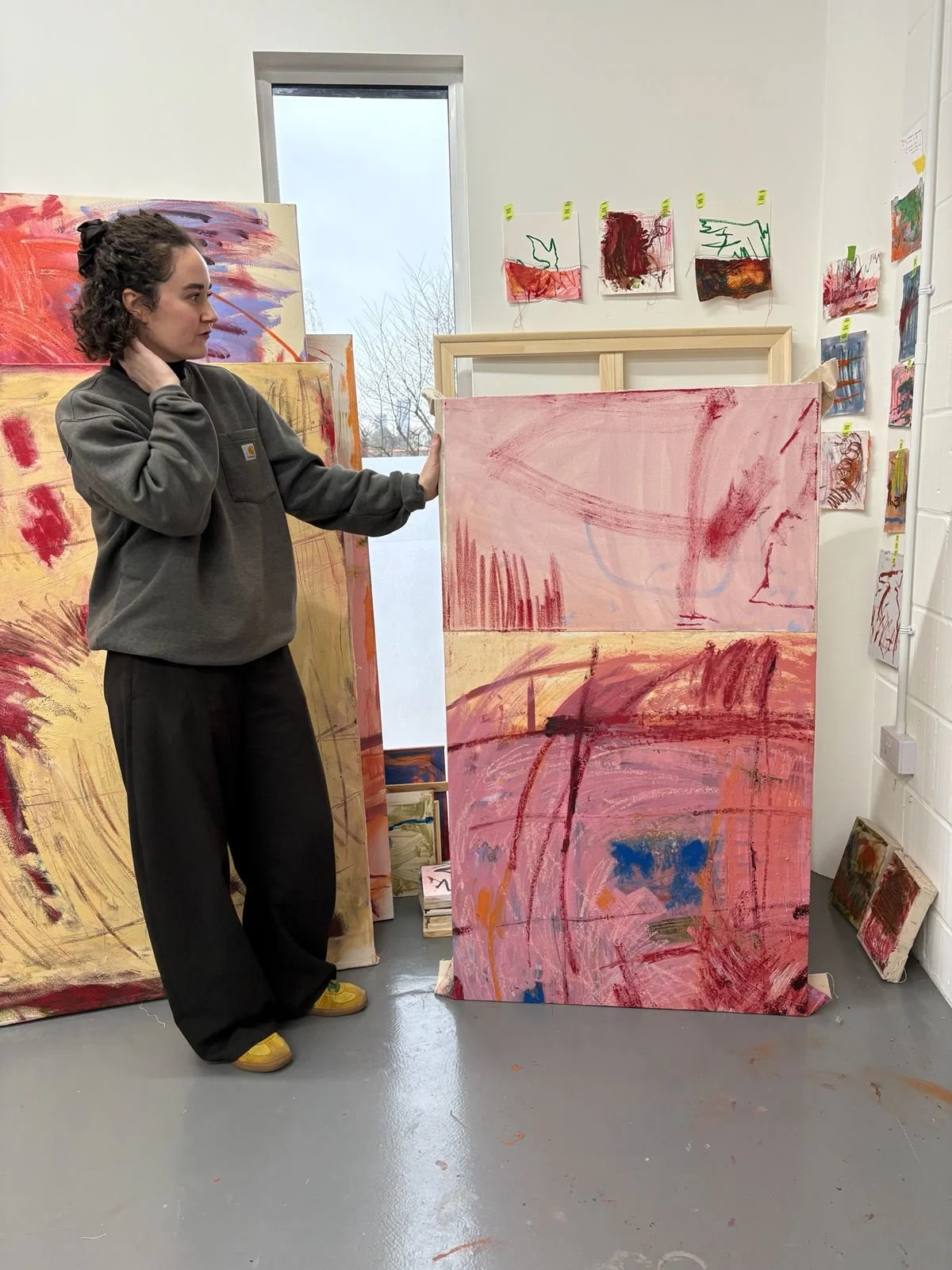
I rarely make sketches, but with the few drawings I do make, I like to use them if I am struggling during the process of a painting. I keep them on my wall to look at and take shapes from, use certain colours or marks, and treat them as tools to help me become unstuck.
However, I usually find myself just going straight into the painting, sometimes working stretched and sometimes unstretched, often on the floor, treating the canvas how I would a drawing.
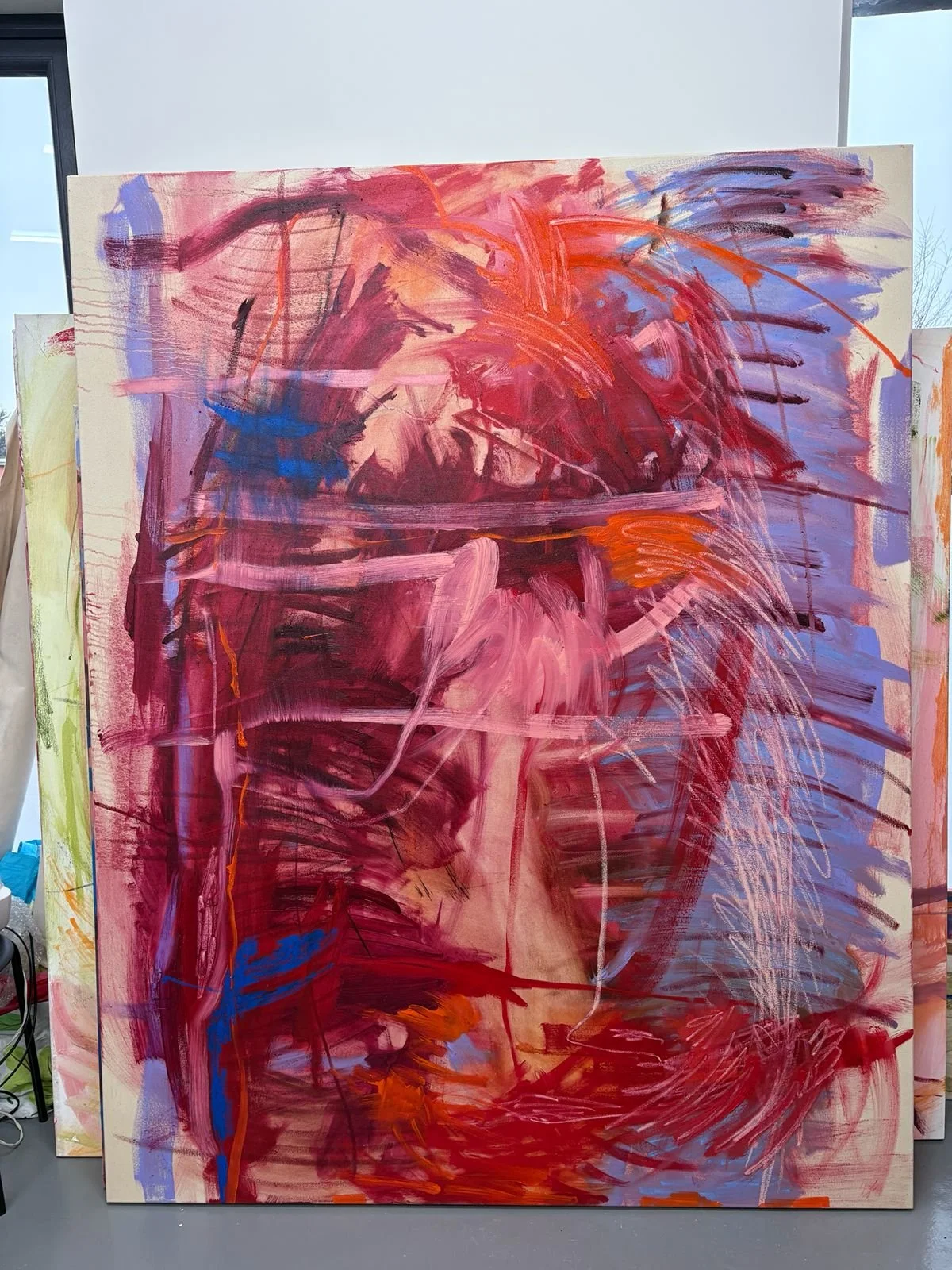
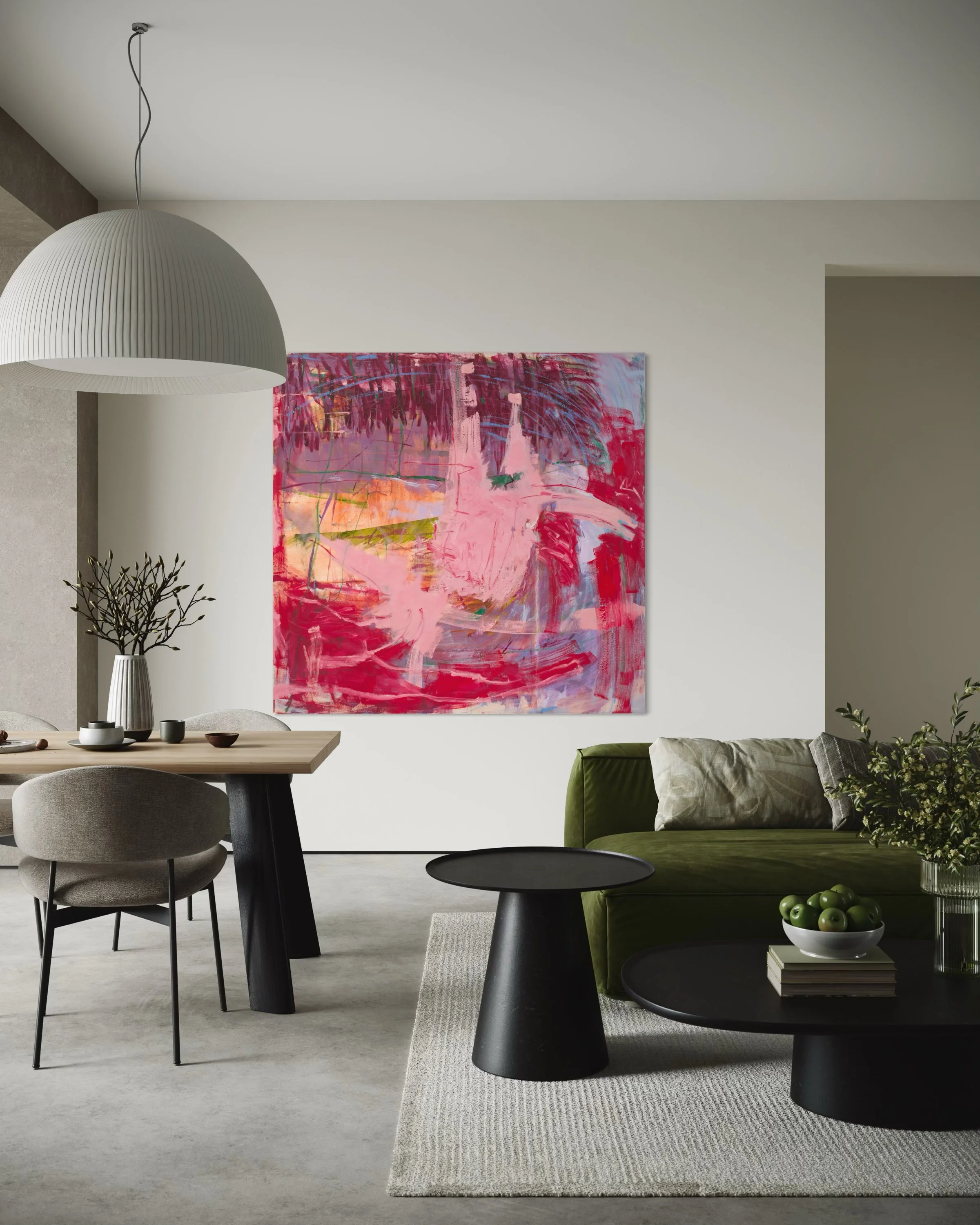
I start by drawing lines with a paintbrush, making marks with colour and responding to what is being put down: rubbing back, layering up again, and going into wet paint with an oil bar, drawing and scribbling to create rich, dense texture until forms start to emerge.
This can either be a quick, flowy experience or a long battle where my ego is fighting what the painting wants to be, which happens the majority of the time. The work often goes through cycles of obliteration and re-emergence again and again.
It’s a continuous lesson for me to remember to let go at a certain point, relax more, and stop trying to control an outcome.
Do you work in a progression or series of works?
I don’t really work in a series. My approach is responsive, guided by curiosity, experimentation, reworking, and the conversations between the works themselves.
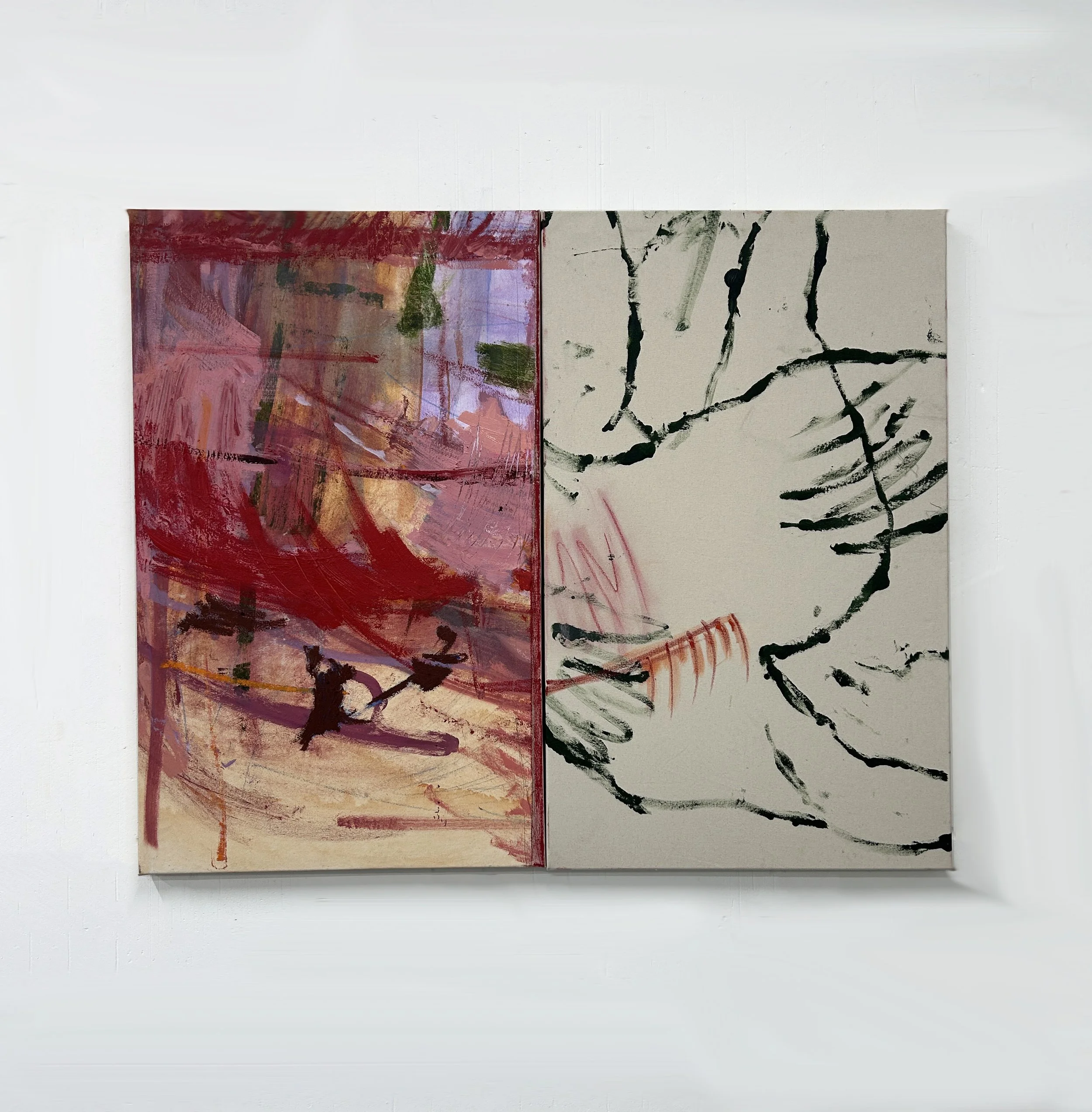
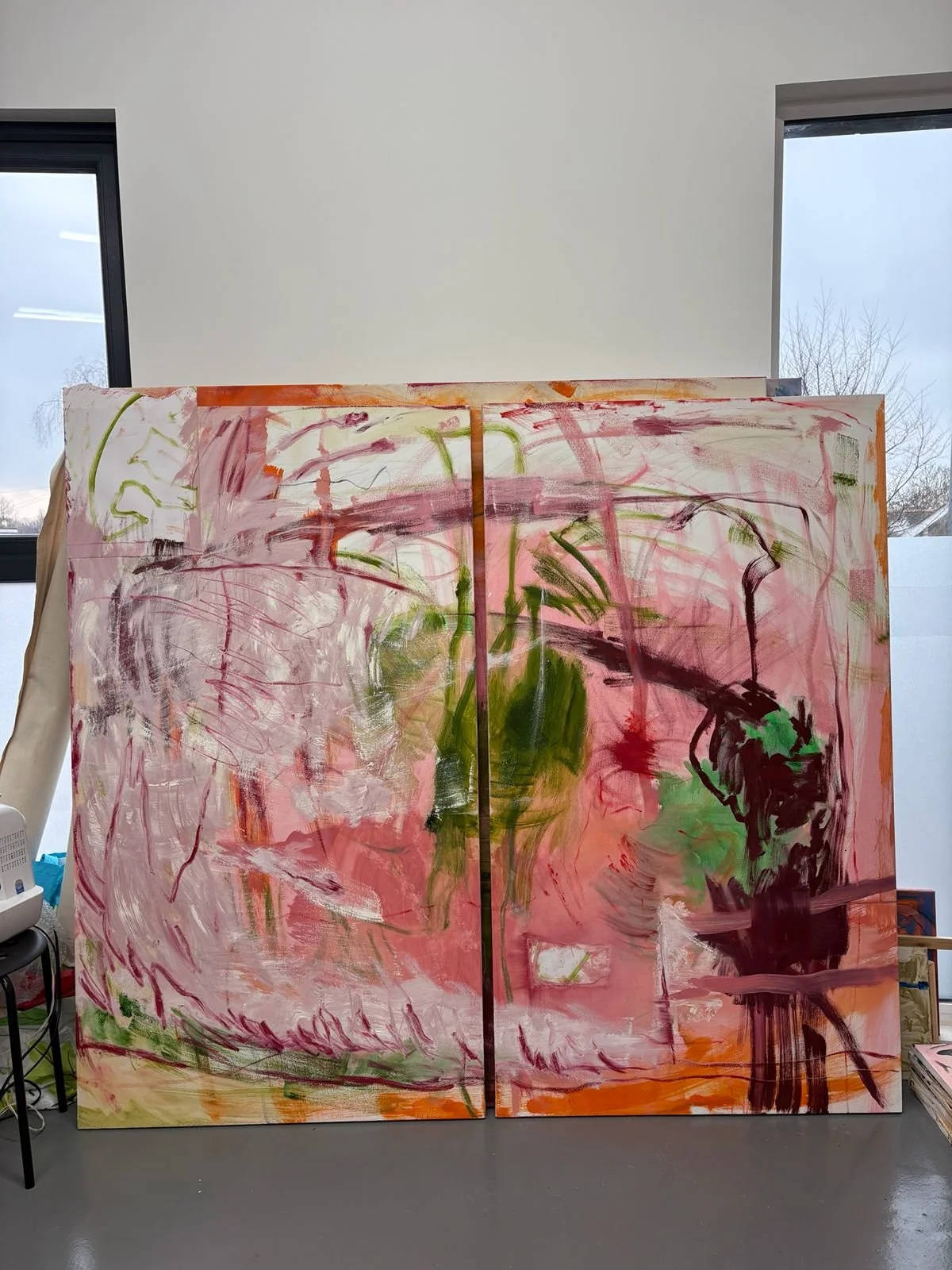
That said, at the moment I have started a kind of series in which I work with unfinished or overworked paintings and repurpose them alongside newer works. I lay everything out on the floor and start piecing parts together - puzzling, connecting, seeing what speaks to each other. This often means parts have to be cut off, then stitched together with pieces from another painting they work better with.
I enjoy juxtaposing areas of density with fresher, more raw works, either stitching them together or presenting them as diptychs side by side. This process satisfies both my inability to leave something alone and my desire to let something be.
I find myself problem-solving for most of the process, but I enjoy puzzle-piecing, re-figuring, and allowing the work to re-emerge into something entirely different from what I thought it would be. I can’t predict what will happen, and I don’t want to. I just keep going and trust that I will arrive at a resolution, or at least a point that makes the most sense to me.
What keeps me engaged is not knowing; until I reach an aha moment, when the work excites me and keeps asking me to look back at it, as though it hasn’t been fully figured out yet.
What informs your choice of colour palette in your work?
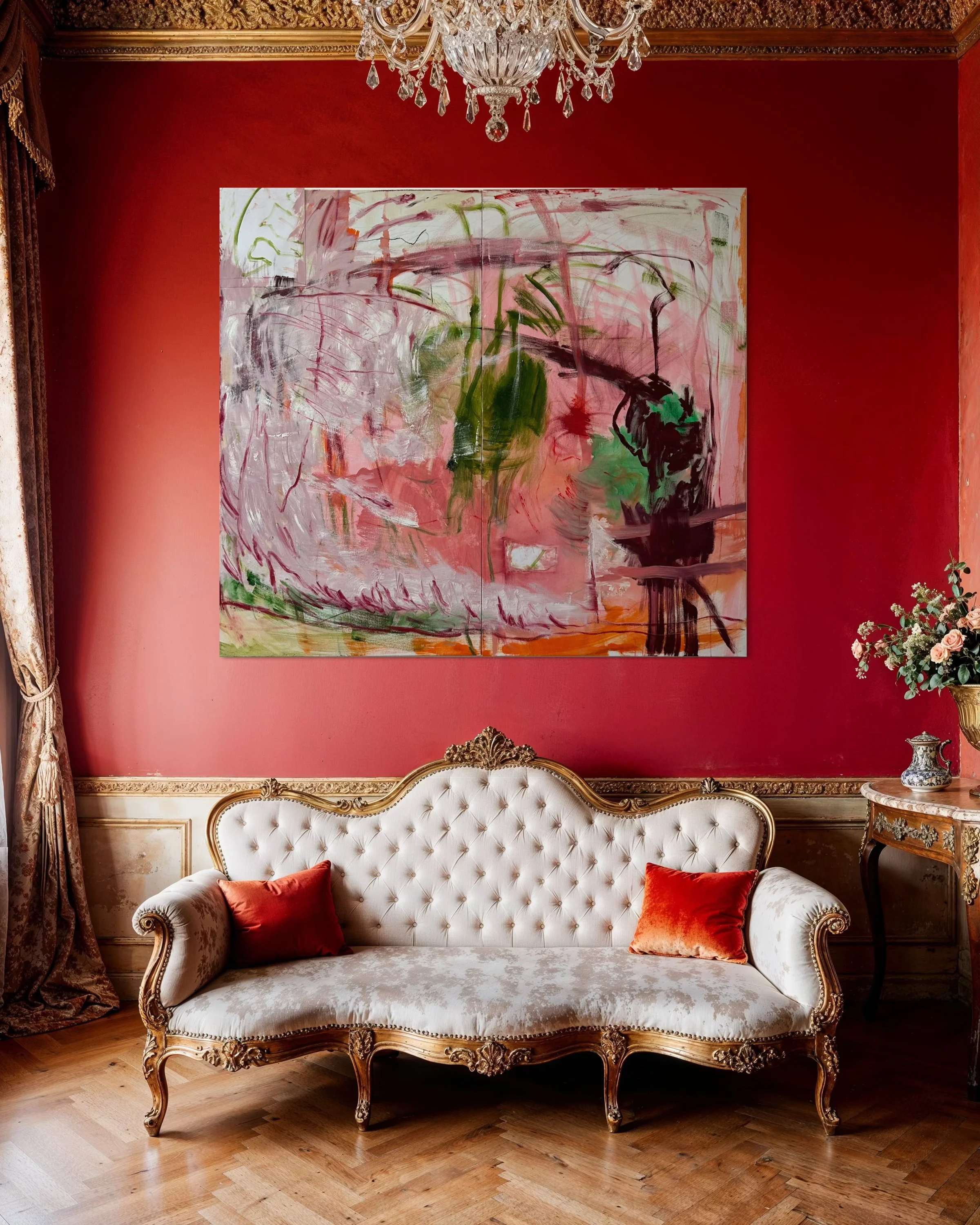
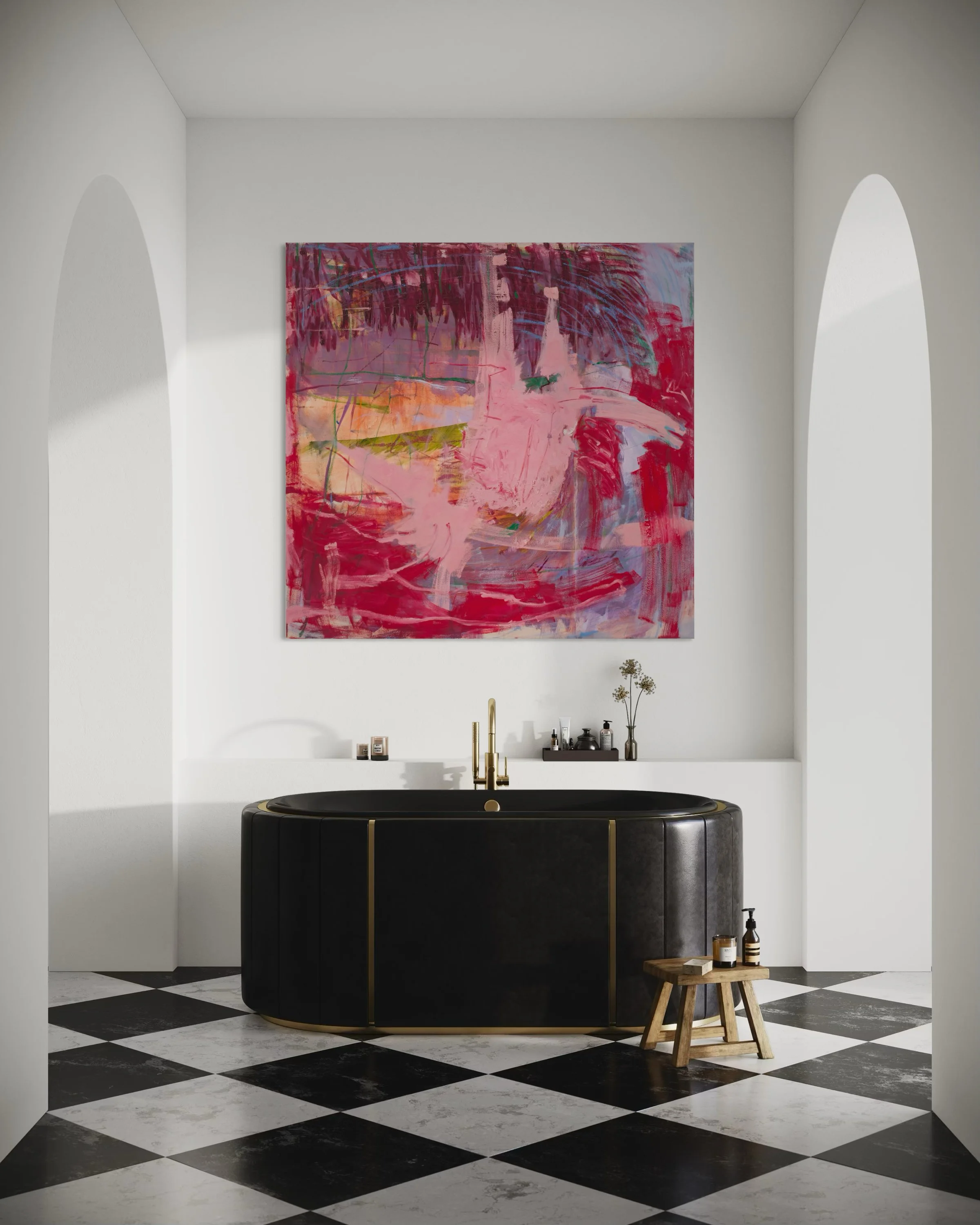
My colour palette comes from what I am naturally drawn to, lots of deep cadmium red, fleshy pinks, cobalt blue, dark and olive greens, and bright orange. These have been my favourite colours for as long as I can remember.
I’ve always been confident with colour from a young age; it’s something that feels second nature to me. I’ve really leaned into that strength, as it’s what makes me want to paint the most - playing with colour and indulging in it.
What inspires you?
I’m really inspired by listening to other artists talk about the process of making, not just painters, but singers, musicians, actors, and writers. I listen to a lot of podcasts where artists discuss bringing something to life and into the world, and I find that deeply inspiring.
Walking alone in nature is also very important to me, and I need to do it often. It gives me headspace, re-regulates me, and allows new ideas to emerge - or simply gives me time to mull things over and make sense of them.
Which artists do you admire, and who has influenced how you paint today?
Before my MA, I was working much more figuratively, but I always had the urge to push the materials further - to become more gestural, expressive, and abstract. For some reason, I felt like I wasn’t allowed to do that.
Artists who inspired me to let go of the figure and fully lean into colour and texture include Rachel Jones and Daisy Parris. I saw Daisy Parris’ show while I was doing my MA at Sim Smith Gallery, and I just knew I had to let go of the figure. It became so clear how inspired I was by colour and texture, and that I needed to stop overthinking and start doing what I had wanted to do for so long.
They have been key to the development of my practice and continue to inspire me. Other artists I admire include Rita Ackermann, Frank Bowling, Ken Kiff, Philip Guston, and Amy Sillman - particularly how Guston talks about painting.
Since graduating, I feel I am really starting to find my voice as an artist. I gained so much from my MA; it truly kick-started my practice and brought me to where I am now. Since then, I’ve had the breathing room to understand what makes me tick; problem-solving, puzzling compositions together, re-figuring, curiosity, risk-taking - and learning, again and again, to trust myself in the process.
Learn More
Ellie Walker’s paintings are the result of sustained looking, listening, and trusting the process; works that resist finality and invite ongoing engagement.
Explore Ellie Walker’s paintings on Artroom Curated, where her latest works are available to view and collect.